Source Customized High Power Led Heatsink for LED Lighting
Find 30 customized high power led heatsink options from Chinese manufacturers. Compare profiles in 6000 series aluminum with T3-T8 temper, anodized or powder-coated finishes, and various packaging for LED lighting applications; compare the available evidence and request quotations based on your requirements.
Key considerations
Products List


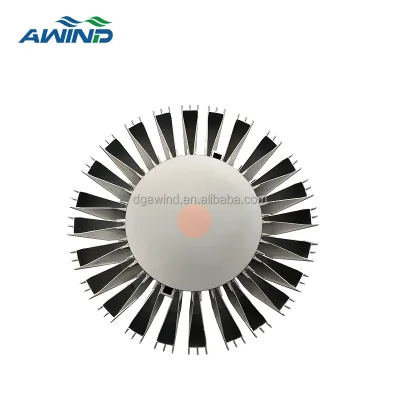
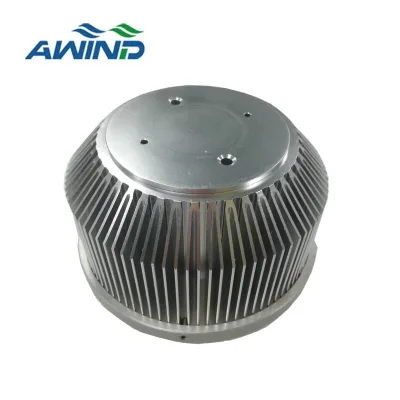
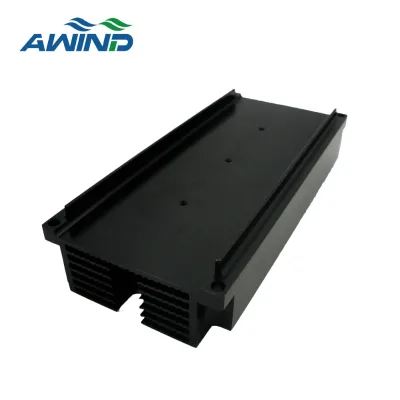
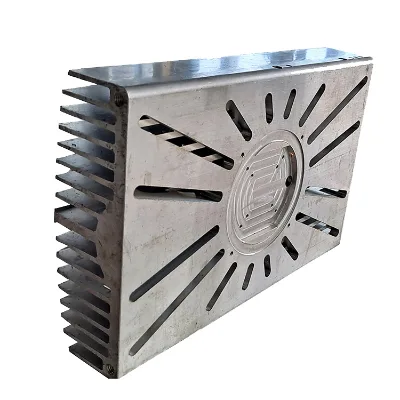


Comprehensive Sourcing Guide
Customized High Power LED Heatsink Sourcing Guide
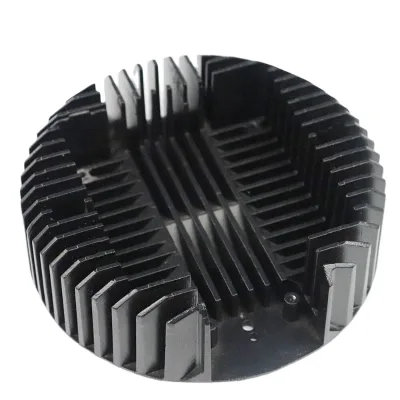
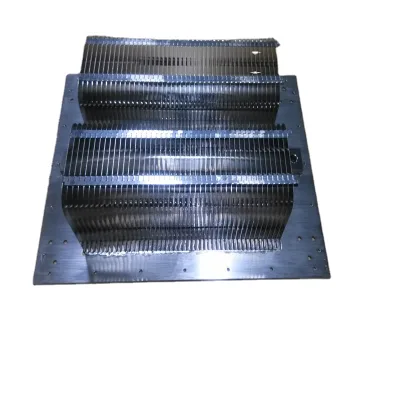
Buyers seeking customized high power LED heatsinks must first recognize that the market offers distinct profiles ranging from industrial aluminum extrusions to specialized thermal management units. The observed product landscape includes specific models like HS-308 and HS-131, which are explicitly designed for LED applications and heater parts. These components often utilize 6000 series aluminum alloys, such as 6063-T5, to ensure optimal thermal conductivity while maintaining structural integrity under high thermal loads.
Procurement decisions should account for the variety of surface treatments available, including anodizing, powder spraying, and mechanical polishing. These finishing processes are critical for dissipating heat efficiently and protecting the aluminum substrate from corrosion in demanding environments. Buyers must verify that the selected profile shape, whether round or custom extruded, aligns with the specific thermal requirements of their LED assembly to prevent overheating and ensure long-term operational stability.
Product Scope and Observed Listing Signals
The available inventory demonstrates a wide range of customization capabilities, with suppliers offering tailored dimensions and specific temper grades like T3 to T8. Listings frequently indicate that the product shape can be adapted to specific needs, with some profiles designated for window and door applications while others are strictly for heat dissipation. This flexibility allows buyers to source components that fit unique mechanical constraints without compromising the thermal performance required for high-power LED systems.
Observations of packaging and logistics reveal diverse options, from standard cartons and wooden cases to protective PVC and shrink films. Delivery timelines typically range from 15 to 30 days, though some specific orders may require up to 30 days for completion. Buyers should note that minimum order quantities vary significantly, ranging from single units to thousands, which impacts the economic viability of small-batch prototyping versus large-scale production runs.
Technical Specifications to Verify
Thermal performance is heavily dependent on the alloy composition and temper state, with 6000 series aluminum being the predominant material choice for these applications. Buyers must confirm that the specific alloy grade matches the thermal conductivity requirements of their design, as variations in the alloying ingredients can significantly affect heat transfer rates. Additionally, the temper designation, such as T5 or T6, dictates the mechanical strength and dimensional stability of the extrusion under thermal cycling conditions.
Dimensional accuracy and surface finish are equally critical, with tolerances often specified around ±1% for critical mounting interfaces. The surface treatment process, whether anodic oxidation or chemical polishing, directly influences the emissivity and friction properties of the heatsink. Buyers should verify that the machining capabilities, including tapping, cutting, and milling, are available to create precise mounting holes and interfaces that ensure a secure fit with the LED driver and lens assembly.
Compliance and Safety Documentation
Regulatory compliance is a non-negotiable aspect of sourcing, with many suppliers providing certifications such as ISO 9001:2000 and ISO 14001:2004 to demonstrate quality management systems. These standards ensure that the manufacturing processes adhere to international benchmarks for consistency and environmental responsibility. Buyers should request current certification documents to verify that the supplier maintains these standards throughout the production lifecycle, particularly for products destined for markets with strict regulatory requirements.
Safety certifications like RoHS, CE, and TUV are frequently cited in product listings, indicating adherence to restrictions on hazardous substances and electrical safety standards. For exports to specific regions, certifications such as SONCAP and CIQ may be mandatory to clear customs and ensure market access. Procurement teams must validate that the specific batch of heatsinks carries the necessary documentation to meet the regulatory framework of the destination country, avoiding potential delays or rejection at the border.
Cost Drivers and Commercial Terms
Pricing for customized high power LED heatsinks is influenced by the complexity of the extrusion profile, the volume of the order, and the specific surface finishing requirements. The observed price range spans from $0.50 to $45.00, reflecting the difference between standard off-the-shelf profiles and highly engineered, custom-machined solutions. Buyers should anticipate that intricate designs requiring multiple machining steps or specialized coatings will command a premium over basic extruded shapes.
Commercial terms regarding delivery and payment are essential for supply chain planning, with lead times typically falling between 15 and 30 days. The minimum order quantity can vary from one unit to 3,000 units, affecting the unit cost through economies of scale. Buyers must negotiate clear terms for packaging, such as the use of wooden cases for heavy loads or shrink films for smaller batches, to prevent damage during transit and ensure that the final product arrives in pristine condition for assembly.
Supplier Qualification and Quality Control
Supplier qualification should include a review of their manufacturing capabilities, including the use of advanced inspection tools like calipers, CMMs, and projectors to ensure dimensional accuracy. These quality control measures are vital for maintaining the tight tolerances required for high-power LED applications, where even minor deviations can lead to thermal resistance issues. Buyers should request evidence of these inspection processes to confirm that the supplier has the technical infrastructure to produce consistent, high-quality components.
The origin of the product, often listed as China with specific production hubs in Shandong or Guangdong, provides context for the supply chain logistics and potential lead times. Buyers should assess the supplier's ability to handle custom branding, such as silk screen logos, and their capacity to manage the full range of surface treatments. Establishing a relationship with a supplier that demonstrates robust quality control and transparent communication is key to mitigating risks associated with custom manufacturing.
Long-Term Procurement Checks
Sustaining a reliable supply chain requires regular audits of the supplier's ability to maintain consistent quality over time, especially when scaling production volumes. Buyers should implement periodic checks to ensure that the alloy composition and temper grades remain consistent with the initial samples, as variations in raw materials can degrade thermal performance. Continuous monitoring of the surface finishing processes is also necessary to prevent defects that could compromise the longevity of the LED assembly.
Future-proofing the procurement strategy involves verifying the supplier's adaptability to changing market demands and regulatory updates. As LED technology evolves, the thermal requirements for heatsinks may shift, necessitating new profiles or materials. Buyers should maintain open dialogue with suppliers to ensure they can accommodate design changes and new certification requirements without significant disruption to the supply chain, ensuring a stable and efficient procurement process for years to come.
FAQs
What customization options are available for the heatsink?
Customization is available for shape, color, and size to meet specific needs. Buyers can request silk screen logos, black finishes, or tailored dimensions. The product supports various temper grades like T3 to T8 and offers surface treatments such as anodizing or powder spraying for durability.
Which certifications do the aluminum alloy products hold?
The aluminum alloy products hold multiple certifications including ISO, RoHS, TUV, CE, SONCAP, and CIQ. These ensure compliance with international safety and quality standards. Specific grades like 6000 Series are used, and the manufacturing process adheres to ISO 9001 and ISO 14001 standards for consistent quality.
How long is the delivery time for orders?
The standard delivery time ranges from 15 to 30 days depending on order volume and specifications. Some specific models may require 22 to 30 days for processing. Buyers should confirm exact timelines based on their chosen customization options and current production capacity at the origin in China.
Can the heatsink be used for LED applications?
Yes, the heatsink is specifically designed for LED applications and heater parts. It features a 6000 Series aluminum alloy material with high thermal conductivity. The product is available in various models like HS-308 and HS-309, ensuring efficient heat dissipation for high-power LED systems.
What surface finishing processes are applied to the profile?
Surface finishing includes anodic oxidation, anodizing, and powder spraying to enhance corrosion resistance. Mechanical or chemical polishing is also available for a smooth finish. These processes ensure the aluminum profile meets aesthetic and functional requirements for industrial, window, door, and decoration applications.
What is the minimum order quantity for these products?
The minimum order quantity varies from 1 to 3000 units depending on the specific product model and customization level. Buyers can source small batches or large volumes. Packaging options include carton, wooden cases, or PVC film with shrink film to ensure safe transport during delivery.
Where are these aluminum profiles manufactured?
These aluminum profiles are manufactured in China, specifically in Shandong and Guangdong provinces. The origin ensures access to established supply chains and competitive pricing. Buyers can expect consistent quality from suppliers adhering to international standards like ISO and TUV for all exported aluminum alloy products.